European Weed Research
Society Symposium
28 June - 2 July, 2027
Uppsala, Sweden
Days left to EWRS 2027
Day(s)
:
Hour(s)
:
Minute(s)
:
Second(s)
European Weed Research
Society Symposium
28 June - 2 July, 2027
Uppsala, Sweden
Days left to EWRS 2027
Day(s)
:
Hour(s)
:
Minute(s)
:
Second(s)
Organising Committee
We study both basic and applied aspects of the ecology and management of weeds in agriculture.
We base our research on ecological theory with focus on a system perspective to address challenges in agriculture and to ensure sustainable food production.
Alexander Menegat
Associate Professor,
Swedish University of Agricultural Sciences
Presentation
My research focuses on the impact of agricultural practices on agroecosystem functioning. More specifically, I am interested in how diversifying cropping systems affects the composition of arable plant communities and their functional diversity. Among other methods, I use functional interpretation of botanical surveys to illustrate the impact of agricultural practices on weed communities. To translate this knowledge into agricultural practice, I employ participatory methods, bringing together farmers, extension agents and researchers to design and evaluate cropping systems in short- and long-term field experiments. Alongside my core research areas, I am interested in the environmental, social and economic implications of agroecosystem management.
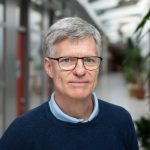
Göran Bergkvist
Professor,
Swedish University of Agricultural Sciences
Presentation
I am responsible for the subject area of weed ecology and management at the Department of Crop Production Ecology and have a background as a university lecturer and researcher in crop science with a focus on cropping systems. I am also Vice Dean at the Faculty of Natural Resources and Agricultural Sciences and hold various assignments that support the faculty’s activities. Among other things, I am Chair of the steering group for the Agricultural Field Research Program, which has the overarching aim of strengthening applied agricultural research at SLU and includes, for example, our four field research stations for agricultural trials, SLU’s long-term experiments, and SLU Fältforsk. I am also Chair of the committee for SLU Fältforsk, which is a collaborative body between stakeholders in field research activities, and Chair of Regional Agricultural Research for Northern Sweden, which is a research and development program aimed at strengthening agriculture in northern Sweden.
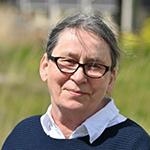
Iris Dahlin
AgrD,
Swedish University of Agricultural Sciences
Presentation
As a research engineer, I collaborate with scientists to coordinate different projects, document research results, and set up and conduct experiments.
In addition to supporting research work technically and laboratory-wise, it is important for me to interact with the general public.
In this way, we can benefit from each other’s resources, competences and experiences, increase the application of research results and understanding of ecological contexts in agricultural systems.
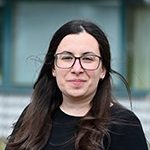
Eirini Daouti
Researcher,
Swedish University of Agricultural Sciences
Presentation
I am the principal investigator on a recently awarded early-career grant from FORMAS (2024-2028), I lead a project aimed at testing the extent to which ecological alternatives to weed control such as weed seed predation can reduce dependence on herbicides. The project is structured around three objectives:
- To advance our knowledge of the potential of weed diversity and weed seed predation, as ecological alternatives for weed control, to mitigate weed-related yield losses.
- To identify the mechanisms by which weed diversity and weed seed predation interact to reduce species growth rates and associated yield losses.
- To evaluate the acceptance of ecological alternatives to weed control among Swedish farmers
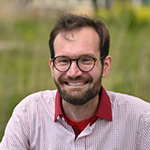
Darwin Hickman
Postdoctoral Researcher,
Swedish University of Agricultural Sciences
Presentation
Weeds can be a major cause of crop yield losses. Many dominant weeds of agriculture are able to adapt quickly to attempts to manage them, for example through evolution of herbicide resistance, or by adapting to tolerate or avoid attempts at physical control. My as a member of the Weed Ecology and Management Group involves examining the behaviour of weed communities, including their interactions with the crop, and their response and adaptation to management factors, while also considering novel methods to reduce their detriment to crop yield.
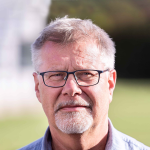
David Hansson
AgrD,
Swedish University of Agricultural Sciences
Presentation
My research is focused at the interface between biology and technology, with an emphasis on sustainable approaches to weed management, primarily in organic farming but also in integrated production systems. This involves developing knowledge and methods that enhance crops’ competitive ability against weeds while reducing the need for chemical inputs.
A central area of my research concerns the potential of cover crops, where I investigate their weed-suppressive properties as well as their effects on nitrogen dynamics (N-min) in the soil profile. I have also studied spring barley and spring wheat to identify varietal traits that improve competitiveness against weeds. In organic spring barley production, I have examined how row spacing and seeding rates influence both yield and weed occurrence. I have further explored the role of crop rotations in achieving long-term weed control.
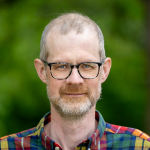
Johannes Albertsson
Researcher,
Swedish University of Agricultural Sciences
Presentation
My research has mainly been focused on the interaction between weeds and willow, a perennial bioenergy crop. The main objective has been to reduce or eliminate the use of herbicides during the establishment phase of the willow crop. I have investigated how willow clones differ in their ability to compete with weeds, and how this ability is affected by the common practice of cutting back first-year shoots. I have also compared the efficiency of chemical and non-chemical weed control methods such as torsion weeders and cover crops. The research has been conducted through large-scale field trials and in close collaboration with farmers and agricultural advisors. I have also been involved in a European project named Climate-CAFÉ. My focus in this project was to obtain new knowledge from Swedish long-term experiments regarding climate change adaptability of different cropping systems.
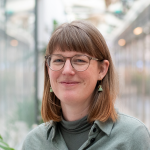
Chloë Raderschall
Researcher,
Swedish University of Agricultural Sciences
Presentation
I am interested in the diversification of agroecosystems for supporting pollinators, natural enemies of pests, and the ecosystem services they provide in the light of climate change.
Ongoing projects: StripES – Strip cropping for harnessing ecosystem services – a farm-scale system design. (Sole PI). Funded by Formas (2025-2028)
Together with Paul Egan, I coordinate the PhD course on Integrated pest and pollinator management (IPPM)
Contact us
Conference Secretariat:
Academic Conferences
Email: ewrs2027@akademikonferens.se
Phone: +46 18 67 10 14 or +46 18 67 10 03
Important dates
28 June, 2027 - Conference start
More dates to be added